Wondering how to remove hard water spots from car paint without scratching it or making the damage worse? Start gently. Those cloudy rings might be removable mineral deposits, or they might be etching that has already bitten into the clear coat.
I see both types on vehicles across Des Moines. Sprinklers, rain followed by strong sun, and water left behind after washing can all create spots. The right fix depends on how long the water sat, what minerals were in it, and whether heat helped those minerals attack the finish.
Here’s how I identify the problem, what I’d safely try at home, and when polishing becomes the better answer.
- Wash and dry the vehicle before treating any water spots.
- Mineral deposits sit on the paint. Etching leaves damage inside the clear coat.
- Use a dedicated water spot remover before trying clay or polish.
- Deep etching usually requires machine polishing by an experienced detailer.
Is It a Mineral Deposit or Clear Coat Etching?
Fresh water spots are usually mineral deposits left after water evaporates. Calcium, magnesium, and other dissolved material stay behind as a chalky ring or patch. These deposits may feel slightly rough, and they often look worse under direct light.
Etching is different. Minerals or acidic contamination have reacted with the clear coat, leaving a shallow crater or uneven area. The mark can remain even after the minerals are chemically removed.
Try the bag test
After washing and drying the panel, place your hand inside a thin plastic sandwich bag and lightly glide your fingertips over the spot. A gritty or raised feel suggests contamination on top. A smooth surface with a visible ring may be etched.
That test isn’t perfect, so work on one small area first. If a proper water spot remover clears the mark, it was mostly a deposit. If the outline stays, polishing may be required.
The Safest Removal Process
Work on cool paint in the shade. Never attack a dry, dusty panel. Rubbing minerals across dirty paint can create swirl marks before you’ve even treated the spot.
- Wash the panel with a pH-balanced automotive shampoo.
- Rinse well and dry with a clean, soft microfiber towel.
- Apply a dedicated automotive water spot remover according to its label.
- Let the product work for the stated time without allowing it to dry.
- Wipe gently, rinse or neutralize as directed, and inspect the panel.
- Repeat once if the label permits. Don’t keep scrubbing a stubborn mark.
A proper remover uses controlled chemistry to break down mineral residue. More pressure isn’t the answer. If two careful applications make no real difference, assume the remaining mark is below the surface.
Always test chemicals on a small, low-visibility area first. Hot paint and dried product can turn a simple repair into a bigger problem.
Why Household Fixes Can Backfire
You’ll see vinegar recommended everywhere. A diluted vinegar mix can dissolve light mineral residue, but it isn’t my first choice. Household vinegar varies, offers little lubrication, and can affect waxes or sealants. A purpose-made automotive product gives you clearer instructions and better control.
A clay bar isn’t a cure for every spot either. Clay removes bonded contamination, but repeated rubbing can mar soft clear coat. If the spot is etched, clay won’t level it because the damage is inside the finish.
- Magic erasers or melamine foam
- Razor blades and hard plastic scrapers
- Bathroom lime removers
- Undiluted acids
- Abrasive kitchen cleaners
- Dry paper towels or rough shop rags
When Machine Polishing Is Needed
If chemical treatment removes the chalky residue but leaves rings behind, you’re probably looking at clear coat etching. Machine polishing can level a tiny amount of clear coat around the defect, making the surface more even and restoring clarity.
The goal isn’t to chase every mark with the strongest pad and compound available. Clear coat is limited. I start with a test spot and the least aggressive combination likely to work, then inspect the result under focused lighting.
Light etching may improve with a finishing polish. Deeper damage can need compounding followed by a refining step. Our two-stage paint correction service is intended for defects that need more than a quick chemical treatment.
Book mobile paint care or call Noble Detailing at +1 515-721-1738.
Prevent Spots During Washing and Drying
Prevention starts with timing. Wash early, late, or in full shade so water doesn’t flash-dry on hot panels. Work one section at a time and keep the rest of the vehicle wet until you’re ready to rinse.
Dry every surface
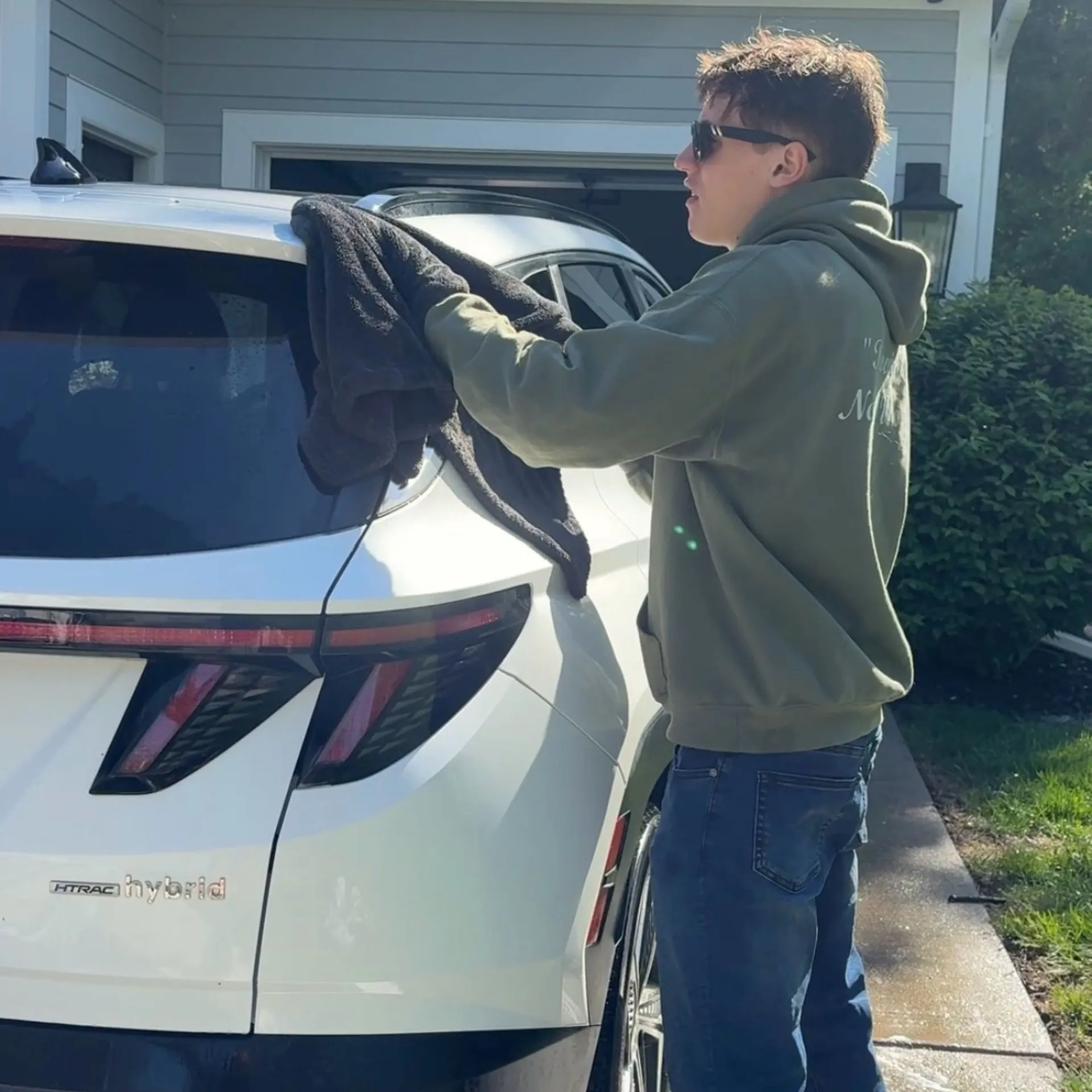
Use a plush microfiber drying towel or filtered air. Pay attention to mirrors, badges, trim seams, door handles, and fuel doors. Trapped water loves to run out five minutes later and dry as a streak.
A rinseless wash can be useful when the vehicle is only lightly dirty because you clean and dry one panel at a time. For heavier dirt, use a normal hand wash with clean mitts and safe wash technique. Our exterior detailing service handles the wash, decontamination, spot assessment, and protection at your home.
If water dries before your towel reaches it, you’re washing too much of the vehicle at once.
Protection Helps, but It Doesn’t Make Paint Spot-Proof
Wax, sealant, and ceramic protection can reduce how strongly contamination bonds to paint. They also make routine cleaning easier. But beading alone doesn’t prevent spotting. A tight bead left to bake in the sun can still leave concentrated minerals behind.
After working on well over 1,500 cars, trucks, boats, and RVs, I’ve learned that maintenance matters more than marketing claims. I’ve detailed across Des Moines since 2019, and I drive the same salted winter roads and dusty construction routes you do.
Wash protected paint with compatible products, remove bird droppings quickly, and dry the vehicle instead of letting it air-dry. If you’re deciding how to protect a newer vehicle, read New Car Paint Protection Done Right. If appearance matters before listing a vehicle, Detail Before Selling explains where paint cleanup fits into that process.
Common Local Causes and Mobile Coverage
Sprinklers are a major source of stubborn spotting. Wind can carry irrigation water onto one side of a parked car, where it dries repeatedly. Rain can also leave marks after picking up dust and pollen, especially when the vehicle sits in direct sun near I-235 or Gray's Lake.
Look, a few fresh spots aren’t an emergency. Wash and dry the vehicle soon. Repeated sprinkler exposure is different because each cycle adds more minerals and gives the existing residue another chance to react with the finish.
We work from the Beaverdale and Drake side of town and travel throughout the metro. We’re usually out in Waukee on weekday mornings, with Clive often fitting the same western route. Scheduling by route helps us spend less time driving and more time working on paint.
Where we detail, and what you need ready
Noble Detailing is fully mobile throughout the Des Moines metro, so we perform the work where your vehicle is parked rather than asking you to travel to a facility.
We cover Des Moines plus West Des Moines, Urbandale, Ankeny, Waukee, Johnston, Clive.
- Enough space around the vehicle for our equipment and safe movement
- Access to water or power if your scheduled service requires it
- The keys available at the start of the appointment
- The vehicle moved out of the garage before we arrive
Our standard travel radius is 30 miles from our home base around Beaverdale and Drake. Appointments beyond that radius may be available with a trip fee confirmed before booking.
Questions we actually get asked
Will vinegar remove hard water spots from car paint?
Diluted vinegar may loosen fresh mineral deposits, but it can strip or weaken some paint protection and offers little lubrication. A dedicated automotive water spot remover is the safer first choice. Test any product on cool paint in a small area.
How do I know if water spots are etched into the clear coat?
Wash and chemically treat a test area. If the chalky residue disappears but a ring or crater remains, the clear coat is probably etched. Smooth spots that stay visible under direct light often require polishing.
Can ceramic coating prevent all water spots?
No. Ceramic protection can make minerals easier to remove, but water beads can still dry and leave deposits. Dry the vehicle after washing and avoid parking where sprinklers repeatedly hit the paint.
Can you remove water spots at my home or workplace?
Yes. We bring our detailing and polishing equipment to the vehicle. We need safe working space, access to the keys, and the vehicle outside the garage. Water or power access depends on the service booked.
How far does your mobile detailing service travel?
Our normal service radius is 30 miles from our home base. We also group appointments around our regular western routes. Work outside the standard radius may include a trip fee that is discussed before the appointment.
Sources worth reading
Hard water spots are easiest to fix while the minerals are still sitting on top. Wash first, use controlled chemistry, and stop scrubbing if the remaining rings appear etched. That’s the point where a careful test spot and machine polishing make more sense.
Noble Detailing serves the Des Moines metro service area with mobile exterior care, correction, and protection. Check our Google Business Profile reviews, then book your appointment when you’re ready to get the paint properly assessed.
Want this done in your own driveway?
Tell us the vehicle, your zip and what you're after. We bring the truck, the water and the power to you anywhere in Des Moines and up to 30 miles out.
I've been detailing vehicles across Des Moines since 2019, I'm trained in professional ceramic coating application and multi-stage paint correction, and I've personally worked on well over 1,500 cars, trucks, boats and RVs in this metro. I live here. I drive the same salted winter roads you do.