A good lake day can leave a boat looking rough by the time it gets home. Boat detailing Des Moines owners can schedule at their driveway helps remove the water spots, algae film, sunscreen, upholstery grime, and trailer dust that build up through an Iowa summer.
The trick is knowing what needs attention after each outing and what can wait for a deeper service. I’ll walk you through both, including the areas people commonly miss before off-season storage.
- Rinse lake residue and wipe down the hull soon after each outing.
- Treat algae film, water spots, and oxidation as different problems.
- Dry upholstery and storage compartments before covering the boat.
- Schedule a deeper cleanup before long-term storage, not next spring.
What to clean after every lake outing
Start with the hull and lower exterior surfaces. At Saylorville Lake and other metro-area waters, a boat can come home with dried minerals above the waterline, algae residue below it, and road grime across the transom. A prompt rinse keeps that mix from baking onto the finish.
Work from the top down while the surfaces are cool. Rinse loose grit first, then wash with a boat-safe soap and a soft mitt. Scrubbing a dry hull is a quick way to drag grit across gelcoat and create haze or fine scratches.
- Rinse the hull, transom, outdrive, trim tabs, and trailer.
- Wash bug residue and road film from the bow.
- Wipe water from seats, cupholders, and storage lids.
- Remove wet towels, life jackets, and food trash.
- Open compartments long enough for trapped moisture to escape.
- Check the trailer wheels, fenders, bunks, and lights for grime or plant material.
Look underneath, too. Plant fragments can cling around the trailer, prop area, or intake points. Clean, drain, and dry practices help limit the movement of aquatic plants and organisms between bodies of water.
Water spots, algae film, and oxidation need different fixes
These problems can look similar from a few feet away, but they aren’t the same. Water spots are mineral deposits left after droplets evaporate. Algae film is organic buildup, while oxidation is a breakdown of the gelcoat surface caused by sun exposure, weather, and time.
Water spots
Fresh spots may come off with a normal wash and proper drying. Older deposits may need a dedicated mineral remover that’s safe for the boat’s finish. Don’t reach for a household bathroom cleaner. Strong acids can stain metal, damage decals, or create uneven results.
Algae and waterline film
A light film often responds to boat-safe cleaner, dwell time, and gentle agitation. Heavy buildup may need repeated treatment. The goal is to loosen contamination instead of attacking it with an aggressive brush.
Oxidation
Oxidized gelcoat tends to look chalky and flat even after washing. Mild cases may improve with machine polishing. Heavier oxidation can require multiple polishing steps, and thin or damaged areas need careful judgment before any correction starts.
If the finish still looks cloudy while it’s clean and dry, the problem probably isn’t dirt. It may be oxidation that needs polishing rather than stronger soap.
Clean the upholstery without trapping moisture
Boat upholstery collects sunscreen, sweat, spilled drinks, snack crumbs, fish residue, and airborne dust. That grime settles into stitching and textured vinyl where a fast wipe can miss it. White seats show the problem first, but darker materials hold the same residue.
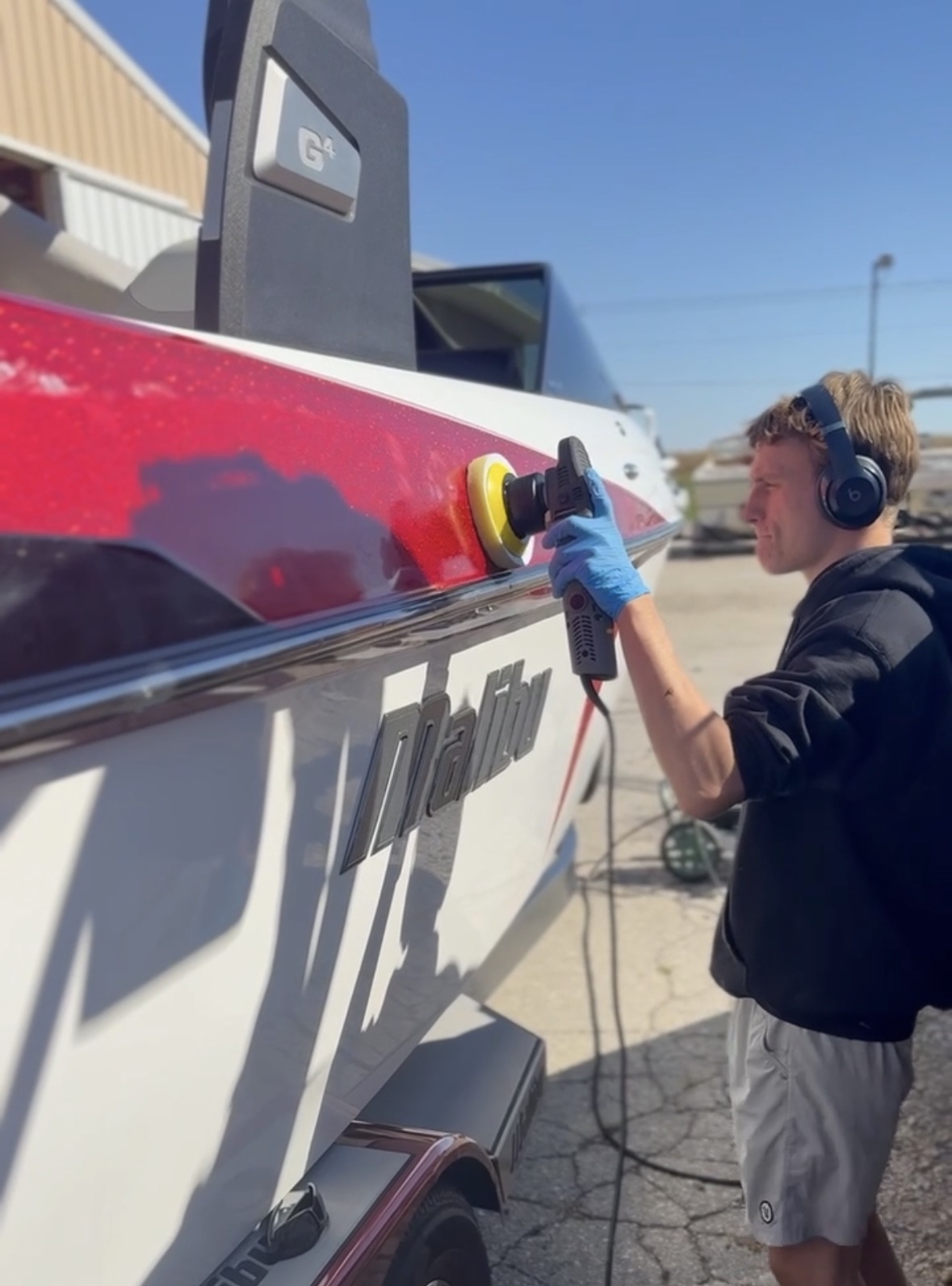
Use a cleaner made for marine vinyl and work small sections with a soft brush or microfiber towel. Avoid soaking seams. Water pushed through stitching can sit inside the cushion, which creates odor and gives mildew a place to start.
- The underside of seat cushions and removable backs.
- Stitching around bolsters and sun pads.
- Carpet or woven flooring under coolers and bags.
- Cupholders, drains, grab handles, and speaker surrounds.
- Ski lockers, anchor compartments, and storage bins.
- The helm, throttle controls, windshield edges, and dash seams.
For carpet or fabric, vacuum dry debris before adding moisture. Spot extraction can help with ground-in grime, but everything must dry fully before the cover goes on. If your tow vehicle also needs attention, our interior deep clean covers the cabin mess that often comes home from the lake.
Use one routine in summer and another before storage
During the season, focus on quick removal of fresh contamination. Rinse the exterior, wash dirty contact areas, dry the finish, wipe the seats, and air out compartments. Short, consistent cleanups are easier than one huge rescue in October.
Before off-season storage
Storage prep should go deeper. Remove every loose item, vacuum the compartments, clean upholstery, wash the hull, inspect the waterline, and dry the boat completely. Don’t seal damp life jackets or towels inside for months. That smell is hard to forget.
- Wash the hull, top surfaces, windshield, and non-skid areas.
- Remove mineral deposits and organic film with surface-safe products.
- Polish oxidized gelcoat where the condition allows it.
- Clean vinyl, carpet, flooring, compartments, and the helm.
- Dry seams, cupholders, lockers, and cushion undersides.
- Protect suitable gelcoat, vinyl, and trim with marine-rated products.
- Clean trailer fenders and wheels, then check for remaining plant debris.
Detailing doesn’t replace mechanical winterization. Fuel treatment, engine service, battery care, plumbing, and freeze protection should follow the boat manufacturer’s guidance or a qualified marine service provider. Think of detailing as the cleaning and surface-care side of storage prep.
Call Noble Detailing at +1 515-721-1738 or [request a mobile appointment](/contact).
What a mobile boat detail looks like
We drive to the boat, so the setup needs enough room to work safely around the hull and trailer. A level driveway or approved parking area is best. We’ll talk through the boat’s size, condition, access, and your priorities before confirming the service.
The exact process depends on whether you need a maintenance wash, interior cleanup, waterline treatment, oxidation polishing, or storage prep. Photos help us estimate the work, especially close shots of the transom, waterline, seats, and any chalky gelcoat. You can also review our broader detailing services and recent project gallery.
Truth is, boat condition matters more than age. A newer boat left wet and uncovered can need more work than an older boat that’s rinsed, dried, and protected after every outing.
I’ve been detailing vehicles across Des Moines since 2019, and I’ve personally worked on well over 1,500 cars, trucks, boats, and RVs in this metro. That experience matters when a surface needs testing before stronger cleaning or machine polishing.
We’re usually out in Waukee on weekday mornings, and Clive often fits naturally into the same day’s route. Scheduling still depends on boat size, driveway access, weather, and the amount of correction needed.
Protect gelcoat after the surface is clean
Protection works best after contamination and oxidation are handled. Putting wax or sealant over chalky gelcoat may add temporary shine, but it won’t fix the weak surface underneath. Prep is the part that makes the finish look even.
A marine wax or sealant can make routine washing and drying easier. Some boats may also be candidates for a marine-specific coating after polishing. Product choice depends on the gelcoat, paint, decals, non-skid surfaces, and how the boat is stored.
Look, no protection makes a boat maintenance-free. Lake water still dries, sunscreen still smears, and trailer miles still throw dust at the stern. Protection buys you easier cleanup and more time before contamination grabs hold.
If you store an RV next to the boat, the RV trip and storage interior checklist covers moisture, food, fabrics, and long-term cabin prep. For vehicle protection planning later in the year, see our fall ceramic coating guide.
A practical schedule for boat owners
You don’t need to fully detail the boat after every launch. You do need to remove the stuff that becomes harder to clean with time. A simple schedule keeps the work manageable and helps you spot small problems before storage day.
- After every outing: drain, rinse, remove trash, dry seats, and air out storage areas.
- Every few outings: wash the full exterior, clean vinyl, vacuum flooring, and inspect the waterline.
- Midseason: check for bonded mineral deposits, staining, oxidation, mildew, and failing protection.
- Before storage: complete a deep interior and exterior cleanup, dry everything, then apply suitable surface protection.
- During storage: check periodically for moisture, cover issues, pests, or trapped odor.
Bottom line, fresh grime is cheaper and safer to remove than baked-on buildup. Give the hull a quick look in dry daylight. If it feels rough, looks chalky, or has a dark waterline that normal washing won’t touch, it’s time for a deeper service.
Where we detail, and what you need ready
Noble Detailing is fully mobile, and we complete the work where your boat is parked when the site has safe working access.
We cover Des Moines plus West Des Moines, Urbandale, Ankeny, Waukee, Johnston, Clive.
- Enough level space to work around the boat and trailer without blocking traffic.
- An exterior water connection and standard power outlet when the scheduled service requires them.
- Keys for the ignition, locked compartments, or storage areas we’ve agreed to clean.
- The tow vehicle or another car moved out of the garage or work area before we arrive.
Our normal service radius is 30 miles from our Beaverdale and Drake side home base. Trips beyond that radius may be available with an added travel fee.
Questions we actually get asked
How soon should I wash my boat after taking it out of the lake?
Rinse it as soon as practical, ideally the same day. Fresh algae film, minerals, bugs, and trailer dust are easier to remove before they dry hard. At minimum, rinse the hull and trailer, remove wet gear, wipe the seats, and open compartments to dry.
Can boat detailing remove chalky oxidation from gelcoat?
Many mild and moderate oxidation problems can be improved with machine polishing. Heavy oxidation may need multiple steps, and damaged or thin areas require caution. We inspect and test a small area before deciding how aggressive the polishing process should be.
Do you detail boats at my home?
Yes. Noble Detailing is mobile, so we work where the boat is parked when there’s enough safe space around the hull and trailer. Access to water and power may be needed depending on the service.
Can you detail a boat while it’s on the trailer?
Yes, most mobile boat work is completed with the boat secured on its trailer. The trailer must be stable, parked on a reasonably level surface, and positioned so we can reach the agreed exterior and interior areas safely.
Do you provide mobile boat detailing in Waukee or Clive?
Yes, both are commonly within our normal 30-mile service radius. We’re often in Waukee on weekday mornings, and Clive can fit the same route. Final scheduling depends on access, weather, boat size, and the service requested.
Should I detail my boat before winter storage or after?
Before storage is better. Removing lake film, food residue, sunscreen, moisture, and upholstery grime keeps those materials from sitting for months. A spring touch-up may still help, but the deep cleanup should happen before the boat is covered for the off-season.
Sources worth reading
A clean boat is easier to inspect, easier to cover, and far nicer to uncover next season. Handle fresh lake residue during summer, then schedule the deeper work before cold weather locks in stains, moisture, and odor.
Want to see what local customers say about our work? Read Noble Detailing’s Google Business Profile reviews, then call +1 515-721-1738 or book your mobile service online.
Want this done in your own driveway?
Tell us the vehicle, your zip and what you're after. We bring the truck, the water and the power to you anywhere in Des Moines and up to 30 miles out.
I've been detailing vehicles across Des Moines since 2019, I'm trained in professional ceramic coating application and multi-stage paint correction, and I've personally worked on well over 1,500 cars, trucks, boats and RVs in this metro. I live here. I drive the same salted winter roads you do.