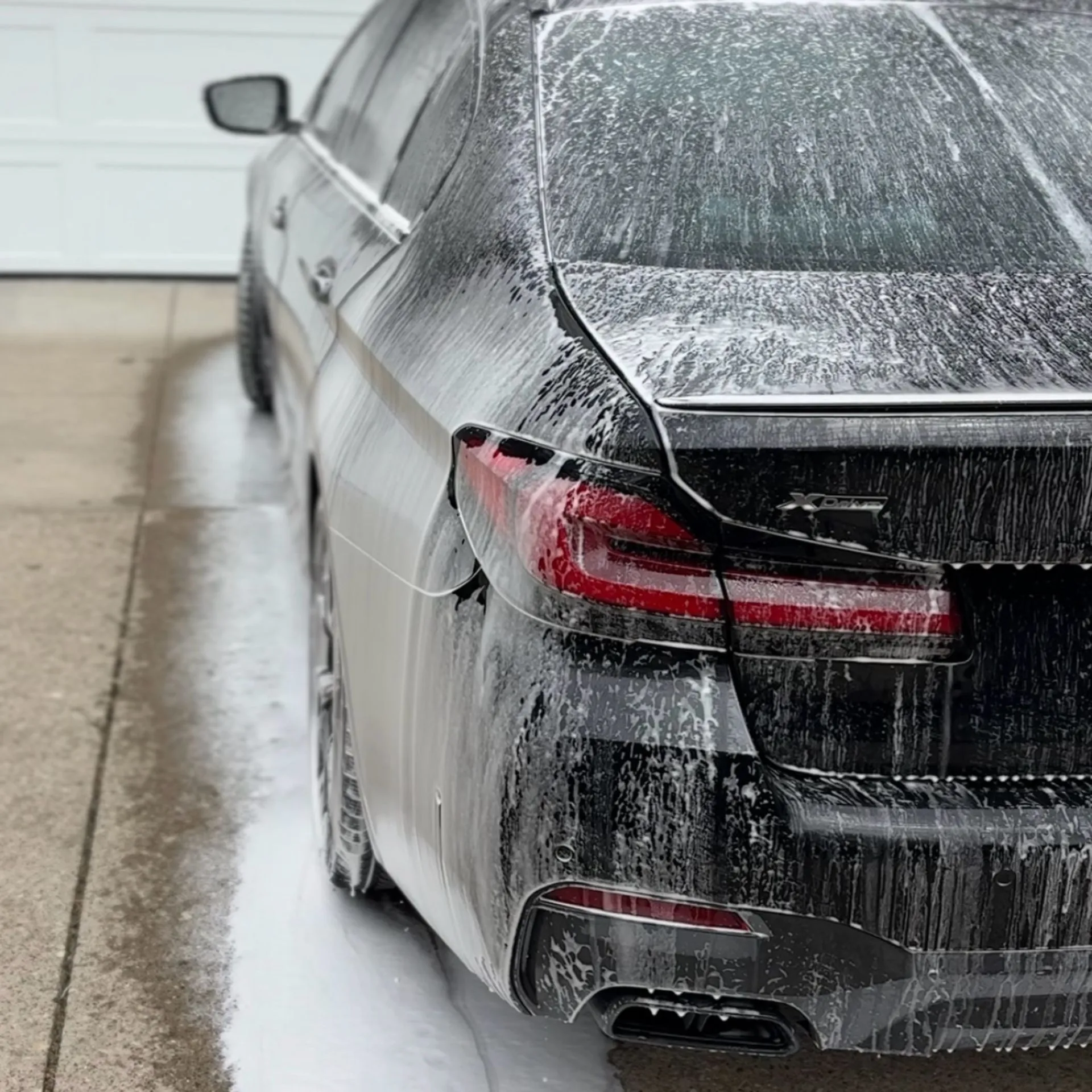
Road salt rarely arrives as one obvious white crust. It starts as a thin film, gets pulled into every wet seam, and keeps coming back all winter.
That’s why winter car detailing Des Moines drivers can count on needs to address more than dirty paint. Brine reaches wheel wells, rocker panels, door jambs, wheels, trim, and the undercarriage. If you scrub that salty grit without a proper rinse, you can trade one problem for a clear coat full of swirl marks.
I live here and drive the same salted roads you do. After detailing well over 1,500 cars, trucks, boats, and RVs since 2019, I’ve seen what a full Iowa winter can leave behind. Here’s how to limit the damage.
- Road brine reaches seams, wheel wells, trim, and exposed metal before snow starts falling.
- Wash on days above freezing, then dry door jambs, handles, mirrors, and seals thoroughly.
- Pre-rinse salt and grit before touching the paint with a wash mitt.
- Apply paint protection before the first snow, not after winter damage appears.
What road salt and brine actually do to your vehicle
Brine is a salty liquid applied before or during winter weather. Because it’s already dissolved, it sprays into tight areas more easily than dry rock salt. It can settle behind trim, along lower door seams, inside wheel wells, and around suspension parts.
Chloride salts can hold moisture against metal. That creates favorable conditions for corrosion, especially where paint, powder coating, or factory underbody protection has been chipped. Salt doesn’t instantly burn through healthy clear coat, but it causes trouble when it stays packed against exposed metal and seams.
Paint faces a different problem. Salt mixes with sand and road grit, creating an abrasive layer. Rub a dry sleeve against it, run it through a harsh brush wash, or wipe it with a towel before rinsing, and you can leave fine scratches behind.
The spots that need the most attention
- Rocker panels and the lower sections of doors
- Wheel faces, barrels, lug areas, and brake components
- Wheel-well liners and the lips around painted fenders
- Door jambs, hatch channels, and fuel-door pockets
- Undercarriage seams, suspension parts, and exposed fasteners
When should you wash a salty car in freezing weather?
Wash it when temperatures are safely above freezing and there’s enough time for the vehicle to dry before the temperature drops again. A sunny afternoon in the upper 30s is far better than washing at dusk when the forecast calls for 20 degrees overnight.
Below-freezing washing can create ice on the work surface and leave water trapped around handles, mirrors, seals, locks, and charging doors. Even if warm water is available, runoff can freeze quickly. We’ll reschedule exterior work if conditions aren’t safe for you, your vehicle, or our equipment.
A practical winter rule is to wash after a major storm once roads have dried and temperatures climb above 32 degrees. Don’t wait for a perfectly clean forecast. Another storm is always coming.
After washing, dry more than the large painted panels. Open each door and wipe the jambs. Dry around handles, mirror housings, rubber seals, the fuel door, and the trunk or hatch opening. Those small steps help prevent frozen doors and drips that turn into water spots.
How to remove winter salt without scratching the paint
Look, the first goal isn’t shine. It’s getting loose salt and grit off the vehicle before anything touches the paint. A thorough pre-rinse is the difference between a safe wash and grinding winter debris into the clear coat.
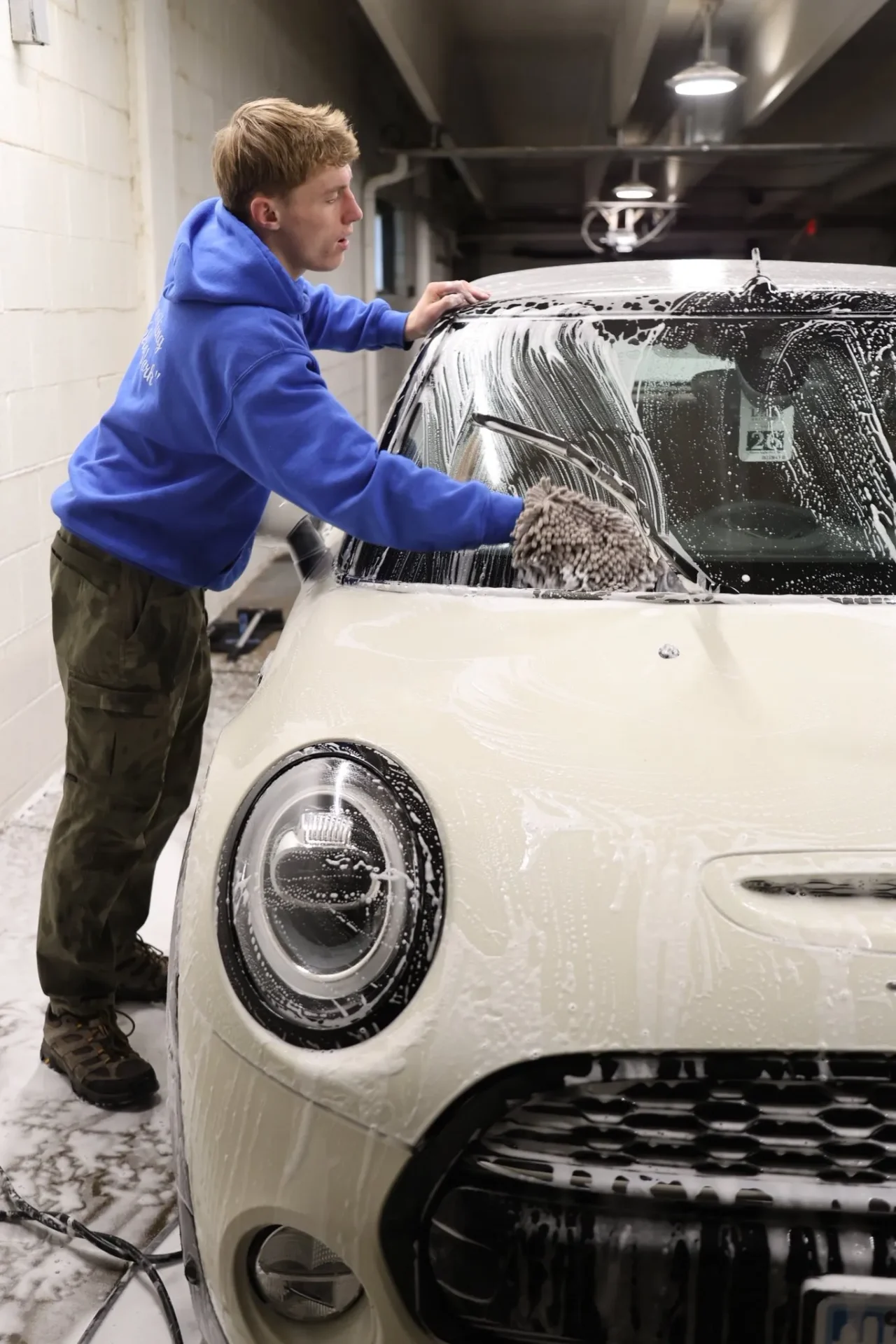
- Rinse wheel wells, wheels, lower panels, and other heavily salted areas.
- Pre-rinse the rest of the vehicle from the top down.
- Apply foam or wash solution and give it time to loosen the film without letting it dry.
- Use clean wash media and a two-bucket method for the contact wash.
- Rinse thoroughly, then dry with soft microfiber towels and forced air where appropriate.
Wheels may need a dedicated cleaner and iron decon to break down embedded brake dust. That’s separate from ordinary road salt, but winter grime tends to bind everything together. Tires and wheel wells also need their own brushes so dirty tools never touch the paint.
Our exterior detailing service follows that controlled process rather than treating a salt-covered vehicle like it only needs a quick wipe. Clean first. Then inspect the paint and choose protection based on its real condition.
Why protection works best before the first snow
Protection is easiest to apply while the weather is still cooperative and the paint can be properly cleaned. If the surface has bonded contamination, we may use chemical decontamination or a clay bar before adding a sealant or coating. Covering contamination doesn’t make it disappear.
My opinion is simple. Fall protection is cheaper and less frustrating than chasing rough paint, stains, and corrosion concerns in March.
A quality sealant creates a slicker surface that’s easier to clean through the season. A professionally prepared ceramic coating can offer longer-lasting chemical resistance and strong water behavior. Neither option makes paint invincible, and neither replaces washing.
I’m trained in professional coating application and multi-stage paint correction, so I’m picky about prep. Coatings lock in the surface underneath them. If that surface has oxidation, swirl marks, or bonded grime, we address those issues before applying the coating.
Book your winter protection service or call +1 515-721-1738.
Don’t ignore the undercarriage and wheel wells
The undercarriage takes the direct hit. Tires throw salty water against suspension parts, fasteners, subframes, plastic liners, and body seams. You may not see that buildup from standing beside the vehicle, but it’s there.
A controlled rinse helps flush loose salt from accessible areas. Pressure matters. Blasting close to damaged coatings, electrical connectors, sensors, or delicate components can cause problems, so this isn’t a contest to see who owns the strongest pressure washer.
An undercarriage rinse isn’t rust repair, and detailing products shouldn’t be confused with dedicated automotive rustproofing. If you already see bubbling paint, deep scaling, or heavy corrosion, ask a qualified repair professional to inspect it.
What about automatic washes?
A touchless wash with an underbody rinse can be useful between proper details, especially after a storm. It may not clean tight wheel areas or stubborn traffic film, and strong detergents can shorten the life of waxes and basic sealants. Still, removing salt is usually better than leaving it packed on for weeks.
A realistic winter care routine for Iowa drivers
You don’t need to wash every day. Pay attention to road conditions, temperature, and how much spray is sticking to the lower half of the vehicle. Highway driving behind traffic often leaves more salty mist than a short neighborhood trip.
Wash after heavy exposure, keep microfiber towels away from dry salt, and inspect lower panels for chips. If you spot bare metal, deal with it before moisture and salt get more time to work.
For owners who don’t want to rebuild the plan after every storm, a maintenance detailing plan keeps washing and protection on a steadier schedule. Frequency depends on mileage, storage, commute length, and whether the vehicle lives on treated highways.
If you’re curious about the setup, scheduling, and what we bring, read How Mobile Detailing Works in Des Moines | Noble Detailing. Winter appointments can shift with temperature, wind, and active snowfall. That’s Iowa. We’d rather communicate early than force an exterior job in unsafe conditions.
How mobile winter appointments fit local routes
We build routes around weather, daylight, and drive time. We’re usually out in Johnston on weekday mornings, Waukee later in the week, and Clive when routes line up with nearby appointments. Exact availability changes, especially after storms when everyone notices the same white salt film.
Your work area needs to be safe, level, and clear of snow or ice. We also need enough room to open doors and move around the vehicle. If the car is in a garage, please move it outside before we arrive unless we’ve discussed a suitable enclosed workspace in advance.
Bottom line, winter detailing is weather-dependent, but it’s still practical. Choose smart wash windows, remove grit before contact, keep salt from sitting for weeks, and protect the paint before the season gets ugly.
Where we detail, and what you need ready
Noble Detailing brings the equipment and detailing process to your home or workplace within our normal service radius.
We cover Des Moines plus West Des Moines, Urbandale, Ankeny, Waukee, Johnston, Clive.
- A safe, level space with room to work around the vehicle
- Access to water or power if requested during scheduling
- The vehicle keys for door jambs, interior access, and safe repositioning
- The vehicle moved out of the garage before arrival unless another setup was approved
Our standard mobile radius is 30 miles from our Beaverdale and Drake home base area. Trips beyond 30 miles may be available with a fee quoted before scheduling.
Questions we actually get asked
How often should I wash road salt off my car in winter?
Wash after heavy salt exposure when temperatures are safely above freezing. For many drivers, that means after a storm once roads have dried. Vehicles driven daily on I-235 or I-35 may need more frequent attention than vehicles used for short local trips.
Can road salt damage clear coat?
Salt usually doesn’t destroy healthy clear coat overnight. The bigger paint risk is abrasive salt and grit being rubbed across the surface. Chips and scratches are more vulnerable because salty moisture can reach exposed metal.
Is it safe to wash a car when the temperature is below freezing?
Usually, it’s better to wait. Water can freeze on the work surface and around locks, handles, mirrors, rubber seals, and charging doors. We schedule exterior work during safer temperature windows and may move an appointment if conditions change.
Do you bring water and power for a mobile winter detail?
Our setup depends on the service and weather. We’ll confirm whether water or power access is needed when scheduling. You’ll also need to provide a safe work space, the keys, and a vehicle that has been moved out of the garage.
Do you provide mobile winter detailing in Waukee, Johnston, and Clive?
Yes, those areas fall within many of our normal routes. Service is generally available within 30 miles of our home base. Timing depends on weather, route density, and the space available at the appointment site.
Will ceramic coating prevent winter road salt damage?
A ceramic coating adds chemical resistance and makes grime easier to release, but it doesn’t make the vehicle damage-proof. You’ll still need safe washing, careful drying, and prompt attention to paint chips or exposed metal.
Sources worth reading
Road salt damage isn’t dramatic on day one. It builds through repeated exposure, rushed washes, missed paint chips, and salty moisture sitting in hidden areas. A careful routine gives your paint, wheels, trim, and underbody a better chance through the season.
Want help before the next storm? Read our Google Business Profile reviews, then book your mobile appointment with Noble Detailing.
Want this done in your own driveway?
Tell us the vehicle, your zip and what you're after. We bring the truck, the water and the power to you anywhere in Des Moines and up to 30 miles out.
I've been detailing vehicles across Des Moines since 2019, I'm trained in professional ceramic coating application and multi-stage paint correction, and I've personally worked on well over 1,500 cars, trucks, boats and RVs in this metro. I live here. I drive the same salted winter roads you do.