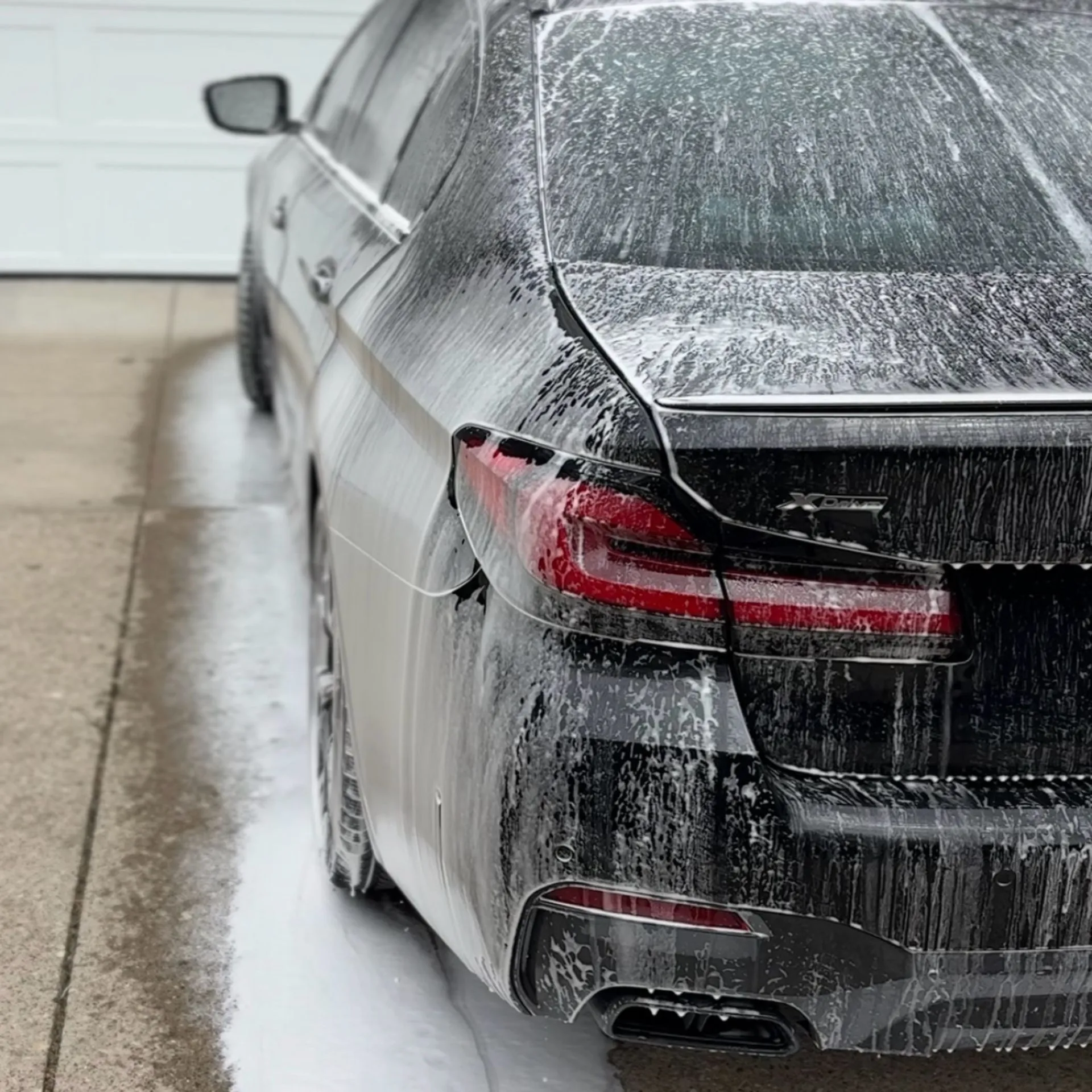
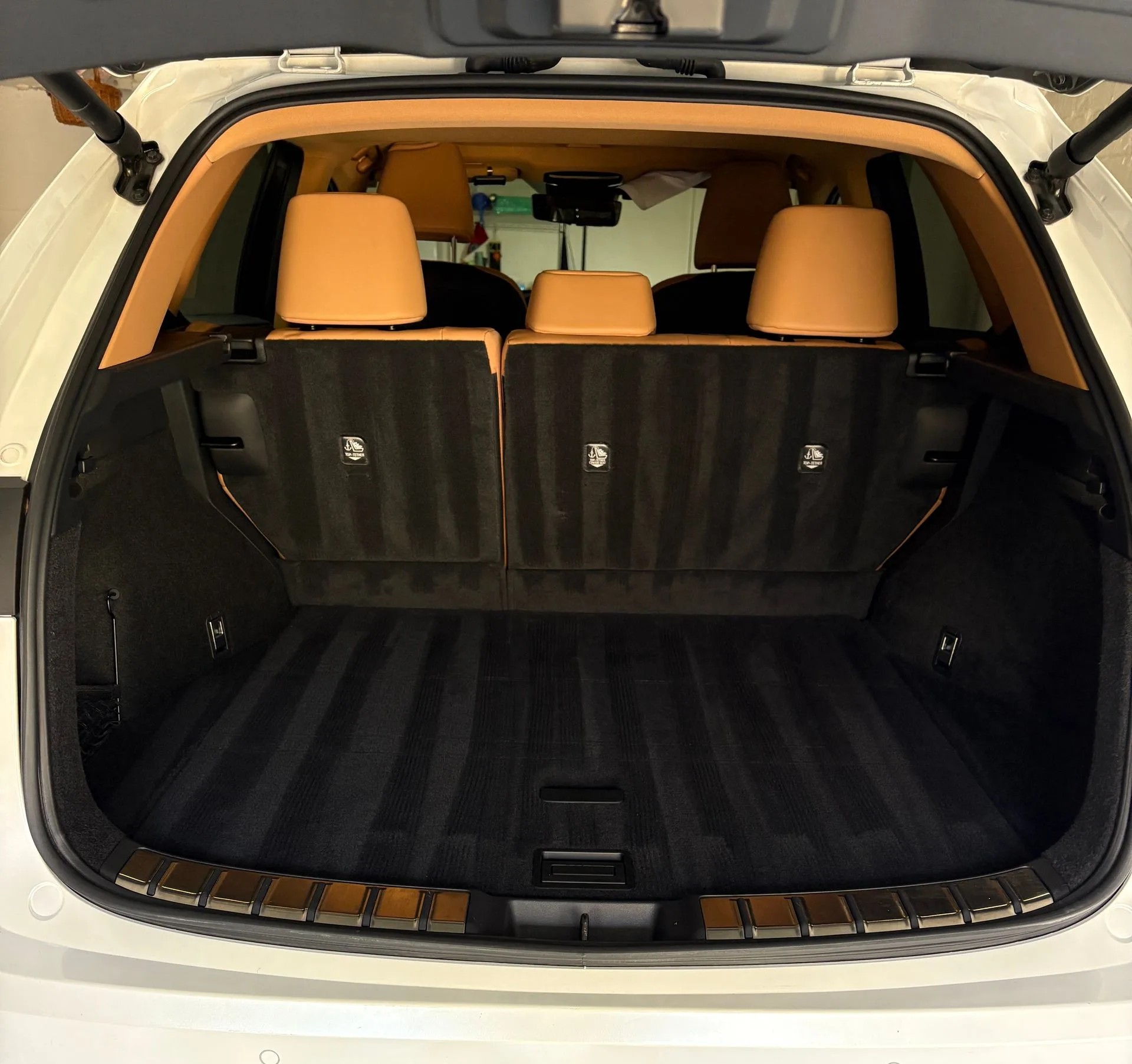
That yellow-green film isn't harmless dust. Our spring car detailing Des Moines service removes pollen, tree sap and leftover winter grime without grinding the mess into your clear coat.
Spring is the right time for the first real paint reset of the year. A quick tunnel wash may remove loose dirt, but it usually leaves bonded brake dust, salt residue, sap and rough contamination behind. If the vehicle still feels gritty after a wash, it isn't truly clean.
We covered cold-weather upkeep in our Winter Car Detailing Des Moines Guide | Noble Detailing. Now it's time to deal with what winter left behind and what storm season is about to throw at the vehicle.
- Book the first deep exterior cleaning after road salt use drops and overnight freezes become less common.
- Never wipe pollen or tree sap from dry paint. Both can leave marks in the clear coat.
- A proper spring reset includes a safe wash, iron decon, targeted sap removal and paint protection.
- Wash the vehicle before checking for hail dents so dirt and pollen don't hide small damage.
When should you schedule the first spring detail?
The sweet spot is usually after regular road treatment has slowed and the forecast gives us a workable stretch without freezing temperatures. You don't need to wait for perfect weather. You just want to avoid paying for a deep reset right before another round of salt and slush.
Book sooner if the paint feels rough, water no longer beads, sap dots are appearing or the lower doors have a gray-brown film. White crust around trim, wheel arches and door jambs is another sign that winter residue is hanging around.
- Loose pollen and dust
- Road film and remaining salt residue
- Iron particles from brakes and winter driving
- Tree sap, tar and organic spots
- Wheel faces, barrels and tire grime
- Drying marks and weak paint protection
For most daily drivers, one thorough decontamination detail followed by simple maintenance is enough to get through spring. Cars parked beneath mature trees may need more frequent attention because fresh sap and bird droppings can bond quickly in warm sun.
What pollen, sap and winter residue do to paint
Pollen looks soft, but wiping it with a dry towel drags dirt across the finish. That creates the light wash scratches people call swirl marks. Black and other dark colors show them first, though every color can be affected.
Tree sap is a different problem. Fresh sap may come off with a safe solvent and patient dwell time. Once it has baked in the sun, it can harden, stain or etch the clear coat. Scraping it with a fingernail or household scrub pad makes the repair worse.
Then there's the winter layer underneath. Salt residue mixes with traffic film and settles around emblems, trim, rocker panels and the rear hatch. Brake dust also bonds to wheels and lower body panels. Our exterior detailing service is built to remove those layers in a controlled order.
Quick test: after washing and drying, place your hand inside a clean plastic sandwich bag and lightly feel the paint. If it feels bumpy, bonded contamination is still there.
What happens during a first decon wash of the year
We start with the vehicle cool enough to work safely. Wheels and tires get separate tools because brake dust doesn't belong in a paint wash bucket. Loose grit is rinsed away before a mitt touches the finish.
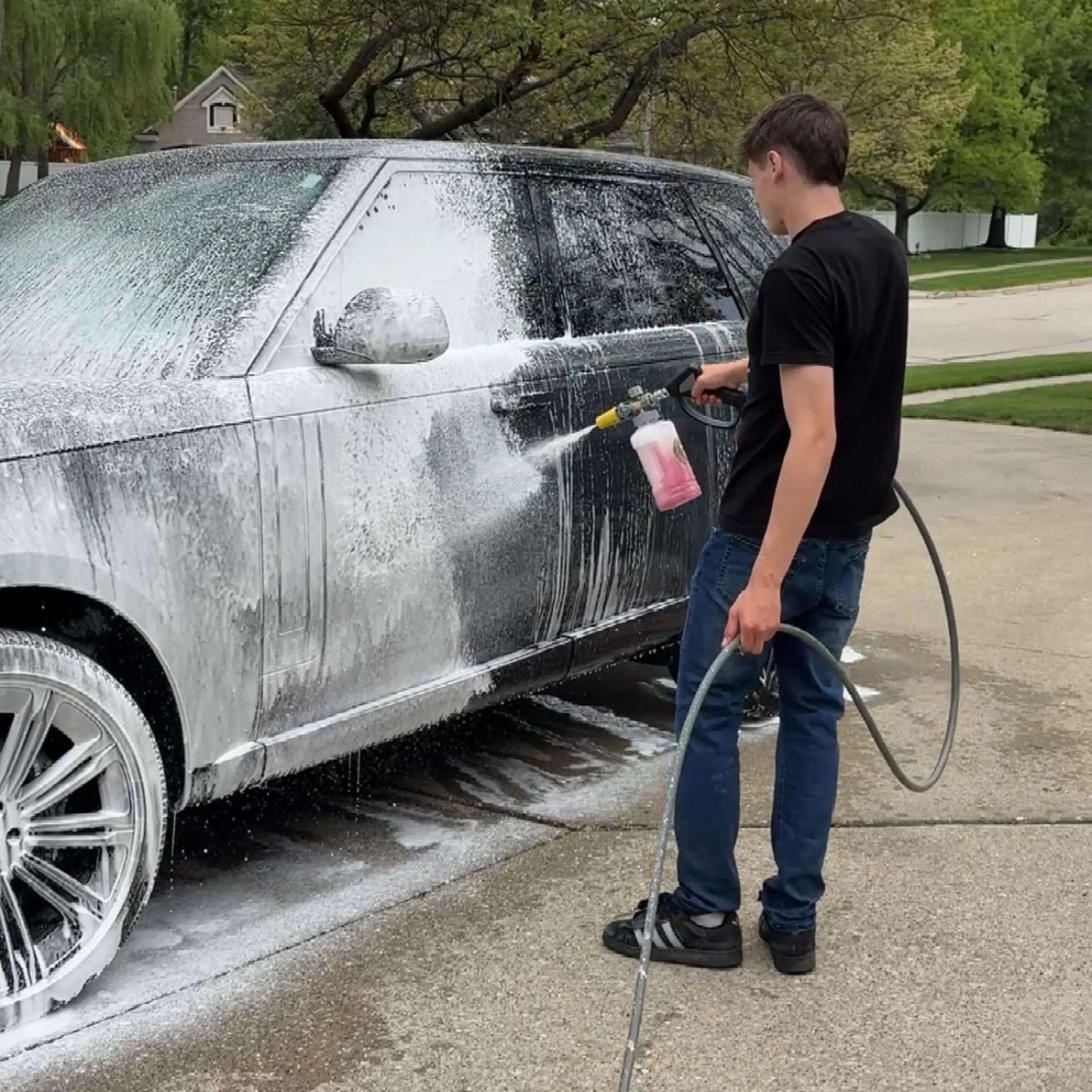
Foam, hand wash and chemical decontamination
A foam pre-wash softens grime and helps carry loose dirt off the surface. We follow with a careful hand wash using clean tools and safe contact methods. Think two-bucket habits, straight passes and frequent rinsing, not one dirty brush across the whole car.
Next comes iron decon where needed. The chemical reacts with embedded ferrous particles so they can be rinsed away instead of dragged through the paint. Tar and sap receive separate treatment because one chemical doesn't solve every type of contamination.
Clay only when the paint needs it
A clay bar or synthetic clay towel can remove remaining bonded material, but it isn't an automatic step. Clay can cause light marring, especially on soft paint. We use it only after chemical decon and with plenty of lubrication. If correction is needed afterward, we'll explain why before polishing anything.
Tree sap removal and hail season fallout
Mature neighborhood trees are great for shade. They are less great for paint. Sap, buds and sticky organic fallout often collect along roof edges, glass, mirrors and hood seams. The sooner those spots are treated, the better the odds of removing them without polishing.
- Park out of direct sun and let the panel cool.
- Don't scrape, scrub or use a household cleaner.
- Wash away surrounding grit before touching the spot.
- Use a paint-safe sap remover with a clean microfiber towel.
- Rinse the area and restore protection afterward.
Storm cleanup requires a different approach. Leaves, twigs and roof grit can scratch paint if they're brushed off dry. Rinse loose debris first. After the vehicle is clean and dry, inspect the hood, roof, trunk and upper door lines under angled light for hail dents or chipped paint.
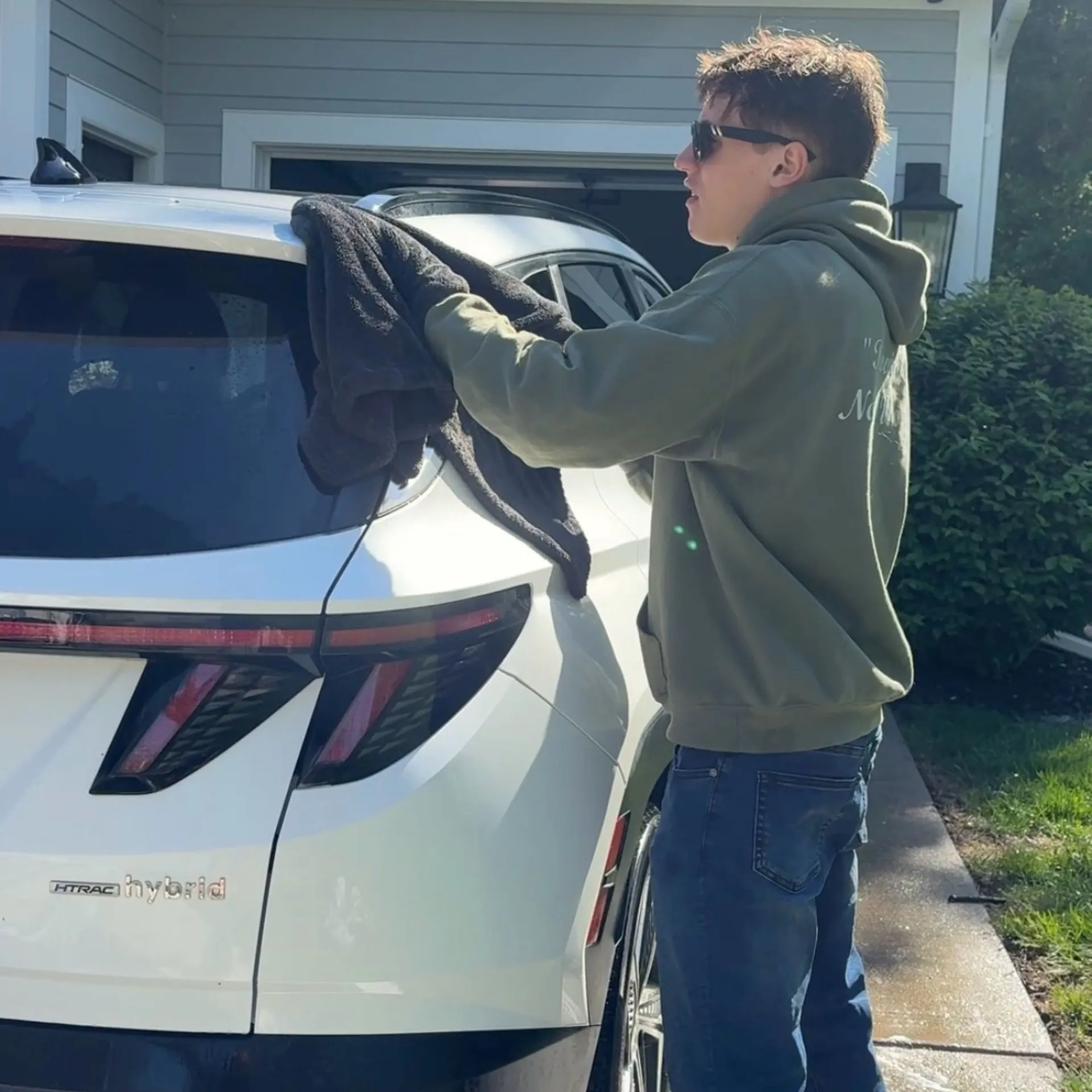
Detailing doesn't remove hail dents. Paintless dent repair is a separate trade. If you may file an insurance claim, photograph the damage and follow your insurer's process before scheduling polishing or coating work. A clean vehicle simply makes an honest inspection much easier.
Want the spring grime handled at your driveway? Call Noble Detailing at +1 515-721-1738.
Should you protect the paint after decontamination?
Yes. Decontamination leaves the surface clean, but clean paint still needs a sacrificial layer. A quality sealant can improve gloss, make pollen easier to rinse away and reduce how strongly fresh grime sticks.
A ceramic coating offers longer-term chemical resistance and easier washing, but it doesn't make a car scratch-proof or hail-proof. Sap and bird droppings still need prompt removal. Coated vehicles still need proper hand washing too.
Not sure which route fits your parking situation and driving habits? Our Ceramic Coating vs Wax: The Honest Take | Noble Detailing explains the tradeoffs without pretending every car needs the most expensive option.
Protection should make ownership easier. If it adds a bunch of rules you won't follow, it's probably the wrong package for your car.
How to keep the vehicle clean between details
Pollen returns fast. That's normal. The goal isn't to keep a daily driver spotless every hour. The goal is to remove buildup safely before it mixes with rain, sap and road grime.
- Rinse heavy pollen before making contact with the paint.
- Use a clean wash mitt and dedicated car shampoo.
- Keep wheel towels separate from paint towels.
- Dry with a soft microfiber towel or filtered air.
- Remove bird droppings and sap as soon as practical.
- Avoid parking beneath dripping branches before a storm.
If you don't have time to keep up with it, a maintenance detailing plan can prevent the vehicle from sliding back to its winter condition. Maintenance works best after the first deep reset, not as a substitute for one.
I've been detailing vehicles across the metro since 2019. I'm trained in professional ceramic coating application and multi-stage paint correction, and I've personally worked on well over 1,500 cars, trucks, boats and RVs here. I drive the same salted roads you do, so I know how quickly the lower panels and wheels collect grime.
What to expect from a mobile spring appointment
We bring the detailing setup to your home or workplace. Before the appointment, we'll confirm the package, vehicle condition, weather and available working space. You keep your day moving while we handle the dirty part.
A driveway or another legal, level work area is ideal. Please move the vehicle out of the garage before we arrive when possible. We may also ask about access to water or a standard power outlet based on the service being performed.
Spring forecasts change quickly, especially during storm season. Light clouds are fine. Lightning, hail, strong wind or heavy rain may require rescheduling because chemicals and open vehicle doors don't mix with severe weather.
Please tell us about heavy sap, fresh hail damage, loose trim or known paint repairs during booking. That helps us bring the right products and set realistic expectations.
Where we detail, and what you need ready
We're usually out in Urbandale on weekday mornings, with Ankeny and Johnston appointments often grouped by route so drive time stays practical.
We cover Des Moines plus West Des Moines, Urbandale, Ankeny, Waukee, Johnston, Clive.
- Enough space to open the doors and work safely around the vehicle
- Water or standard power access if your selected service requires it
- The keys at the start of the appointment
- The vehicle moved out of the garage before arrival when possible
Our normal mobile service radius is 30 miles from our home base near the Beaverdale and Drake side of the city. Appointments beyond that radius may be possible with a trip fee confirmed before booking.
Questions we actually get asked
How often should I wash pollen off my car in spring?
Wash when the film becomes visibly heavy or after pollen mixes with rain and turns into streaky residue. A weekly or every-other-week wash is common for outdoor vehicles, but parking under mature trees may call for faster cleanup. Always rinse first instead of wiping dry pollen with a towel.
Can mobile detailing remove baked-on tree sap?
Many sap spots can be removed with paint-safe chemicals, dwell time and gentle technique. Old spots may have already stained or etched the clear coat. In that case, light polishing or paint correction may improve the mark, but removal depends on how deeply the damage has set.
Can detailing fix hail dents?
No. Cleaning exposes the panels so hail damage is easier to inspect, but dents require a qualified paintless dent repair or body repair provider. If an insurance claim is possible, document the clean vehicle and follow the insurer's instructions before coating or polishing.
Can you detail my car at an apartment or workplace?
Often, yes. We need permission to work there, a legal and reasonably level space, and enough room around the vehicle. Water or power needs depend on the package. Tell us about site restrictions before booking so we can confirm whether the appointment is practical.
How far does your mobile detailing service travel?
The normal service radius is 30 miles from the Beaverdale and Drake home base area. Trips beyond that range may be available with a fee based on distance and scheduling. The fee is discussed before the appointment, not added as a surprise.
Sources worth reading
Spring leaves a messy mix behind. Pollen needs a gentle wash, sap needs targeted treatment, and winter contamination needs more than a quick rinse. Get those layers off before they spend another hot season bonded to the clear coat.
Check Noble Detailing's Google Business Profile reviews, then book your mobile spring detail or call +1 515-721-1738. We'll come to you.
Want this done in your own driveway?
Tell us the vehicle, your zip and what you're after. We bring the truck, the water and the power to you anywhere in Des Moines and up to 30 miles out.
I've been detailing vehicles across Des Moines since 2019, I'm trained in professional ceramic coating application and multi-stage paint correction, and I've personally worked on well over 1,500 cars, trucks, boats and RVs in this metro. I live here. I drive the same salted winter roads you do.